
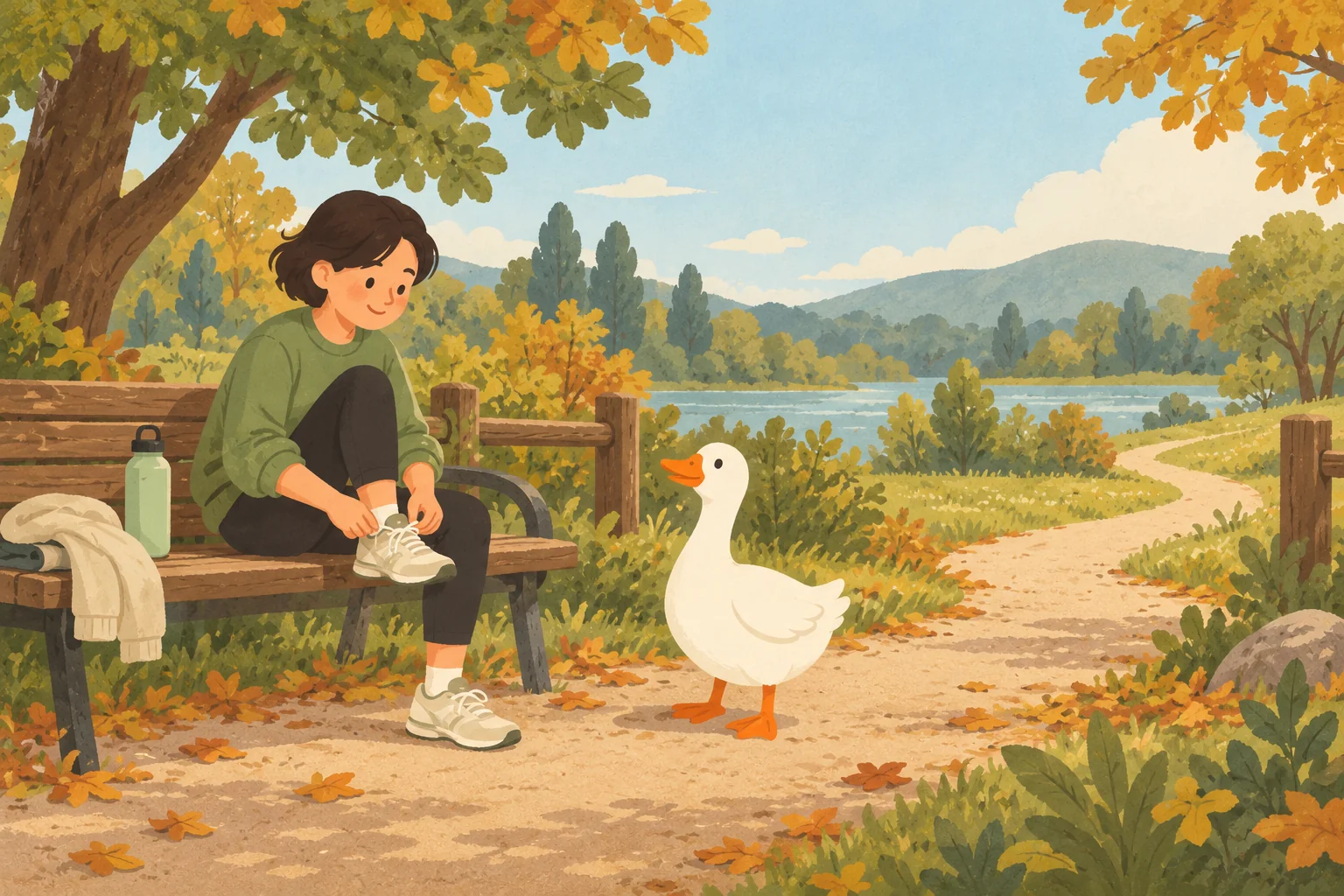
The shoes are still by the door. Your last recorded run is much farther back in the calendar than you meant it to be. Now even choosing the first session feels oddly complicated: do you resume the plan, start at the beginning, or test whether you can still manage the old route?
You do not have to settle the whole comeback before going outside. The first useful decision is what kind of return this is, followed by an outing that fits the person putting the shoes on today.
Start with why you stopped
A busy month, a change in work hours and an injury are different reasons for being away. So are a short holiday during which you stayed active and a long stretch when everyday movement became difficult. The number of days since your last run does not describe all of that.
If pain, an injury, illness or a significant health change interrupted running, follow the advice of the clinician looking after you. Berkshire Healthcare’s return-to-running resource places readiness within a physiotherapist-guided process that depends on the injury and running history. A generic restart article cannot decide when you have recovered.
Read Berkshire Healthcare’s guidance on returning to running.
For an ordinary lapse in routine, begin by describing the present: what movement are you comfortable doing, what time do you have, and what made the previous routine difficult to keep? If you are worried about your health before starting, the NHS advises speaking to a GP first.
Choose a starting point without an audition
You can use a beginner plan again even if you have finished one before. The NHS Couch to 5K programme uses running and walking, schedules rest days between runs, and allows nine weeks or longer. It offers a structure to consider, not a requirement to finish on a particular date.
Look at the actual first session before committing to it. If the running portions feel beyond your current starting point, a walk can be the whole outing. There is no need to run until you find your limit just to prove that the break affected you.
Our beginner run-walk guide explains how to choose a manageable plan.
Leave the old pace out of this first decision. Your previous records can be memories rather than instructions. You can also skip a favourite long route if it invites an awkward choice between finishing the loop and stopping when you intended.
Make the first outing easy to change
Pick somewhere familiar with an easy way to head home. A short loop near your door offers more options than a route that carries you a long way from it. Check the weather and daylight, put out comfortable clothes, and choose a time that does not require rushing.
Here is a planning example, not a training prescription: someone returning after a busy season chooses a nearby park, leaves the pace display alone, and plans a walk. If running is appropriate for them, they use the starting session of a suitable run-walk plan. They keep the option to walk home instead of adding a second loop to make the outing feel impressive.
The NHS recommends warming up and cooling down with walking or gentle jogging. It also advises against running through pain. Stop if you are in pain; persistent, severe or worrying symptoms need appropriate medical advice, not a more motivational playlist.
See NHS guidance on running injuries and when to get help.
Before leaving, decide what would make the outing useful. “I found a route I can return to” or “I learned that walking is the right starting point” gives you something more relevant to notice than a comparison with a much older run.
Use the outing to choose the next one
Once you are home, write a few plain observations: what you did, how it felt, and whether the timing worked. Keep health concerns separate from scheduling problems. Moving the next outing to Saturday can solve a rushed morning; it does not solve pain.
Avoid treating one comfortable session as permission to recreate your old week immediately. The NHS advises building pace and distance gradually. Follow the progression of a suitable plan, with its recovery days, rather than adding missed sessions to the calendar as a debt.
If a beginner plan feels too demanding, inspect the effort and starting point before advancing. You can use the same stage again or choose a smaller starting point when appropriate; needing an adjustment does not make the previous outing worthless.
If the plan feels too hard, use our guide to adjusting Couch to 5K.
Change the part of the routine that stopped fitting
Think about the practical reason the habit disappeared. Did the only available run time collide with school pickup? Did a long preparation routine make every outing feel like an event? Did missing a week make the whole plan seem spoiled?
Choose one change you can actually use. That might mean keeping shoes near the door, choosing a route without a drive, or arranging a walk with someone who is comfortable with your pace. A routine that requires an unusually empty calendar is difficult to return to once the calendar becomes ordinary again.
Give yourself an alternative for a crowded day. For example: “If the planned outing does not fit, I will choose another time rather than squeeze two sessions together.” You can make a fresh decision next week without needing to declare that you have quit.
Waddle offers guided run-walk intervals, adjustable effort and a goose companion. If that kind of support suits you, inspect the plan before starting and choose settings that fit your current needs. The app is not a rehabilitation programme, and this guide does not assume that it will automatically adapt to the reason you took time away.
See how Waddle works and who it is for.
It is also fine to discover that walking is the activity you want to keep. Returning to movement does not have to end with continuous running. You can put the shoes by the door for the next walk, too.
Walking can be the whole plan.
Common questions
Do I have to start Couch to 5K from week one again?
There is no single restart week that fits every break. Consider your current activity, why you stopped and the actual sessions in the plan. A beginner starting point is an option even if you have done it before. Recovery after injury or illness needs advice appropriate to that situation.
How long will it take to regain my old running fitness?
This guide cannot predict that. Time away, activity during the break, health and your previous training all differ. Set the next manageable outing rather than a deadline for matching an old result.
Can I walk during my first run back?
Yes. Planned walking is part of established beginner run-walk programmes, and walking can also be the whole outing. It does not need to be a temporary compromise on the way to another goal.
Sources and further reading
We use plain language and conservative beginner guidance. These sources provide additional public-health and clinical context.
- NHS: Couch to 5K — beginner structure, rest days and flexible completion time; checked October 30, 2026
- Berkshire Healthcare NHS: return to running — injury-specific readiness; checked October 30, 2026
- NHS: running injuries — pain, warm-up and gradual progression; checked October 30, 2026
- Waddle: current product description; checked October 30, 2026
This guide is general educational information, not medical advice. A qualified professional can help you adapt activity to your health, symptoms, or injury history.